

Marble is not fragile.
It is simply honest about the life happening on it.
Lemon leaves a mark because marble is willing to show you what happened. That is part of its beauty. It is also why a beautiful kitchen can start to feel like a room you are afraid to use.
You do not need to turn your home into a museum. You may just need to decide how much protection would help you enjoy the countertop more.
The short answer
Etching is a change in the marble itself. Acidic things such as lemon, vinegar, wine, tomato sauce, and some cleaners react with the surface and leave a dull spot. A penetrating sealer can help slow staining, but it does not stop etching.
For a kitchen that gets used, we recommend three layers of thought:
- Use simple daily habits so small accidents stay small.
- Use a penetrating sealer when the stone needs stain resistance.
- If you want a removable barrier between everyday life and the marble, you may want to consider StoneGuard®. It is the film we install on natural stone, including marble.
The goal is not perfection. It is simply to let you cook, host, and live in the kitchen you chose.
First, decide what kind of mark you are seeing
A stain is usually darker than the surrounding stone. It is something that has absorbed into the marble.
An etch is usually duller, lighter, or less reflective. It is most visible when light moves across a polished surface. It is not dirt. More scrubbing will not remove it.
That distinction matters. A stain may respond to careful cleaning or a poultice. An etch often needs honing and polishing if you would like the finish brought back evenly.
If you are unsure, pause before trying another product. A clear photo in daylight is often enough for us to tell you what you are looking at.
The habits that protect marble without changing your life
The most useful habits are the least dramatic.
- Blot acidic spills instead of wiping them across the surface.
- Use a soft microfiber cloth, warm water, and a stone-safe neutral cleaner.
- Put a board under citrus and a trivet under hot cookware.
- Do not use vinegar, lemon-based sprays, abrasive powders, or scouring pads on marble.
- Keep a microfiber cloth within reach. The best protection is often the thing you will actually use.
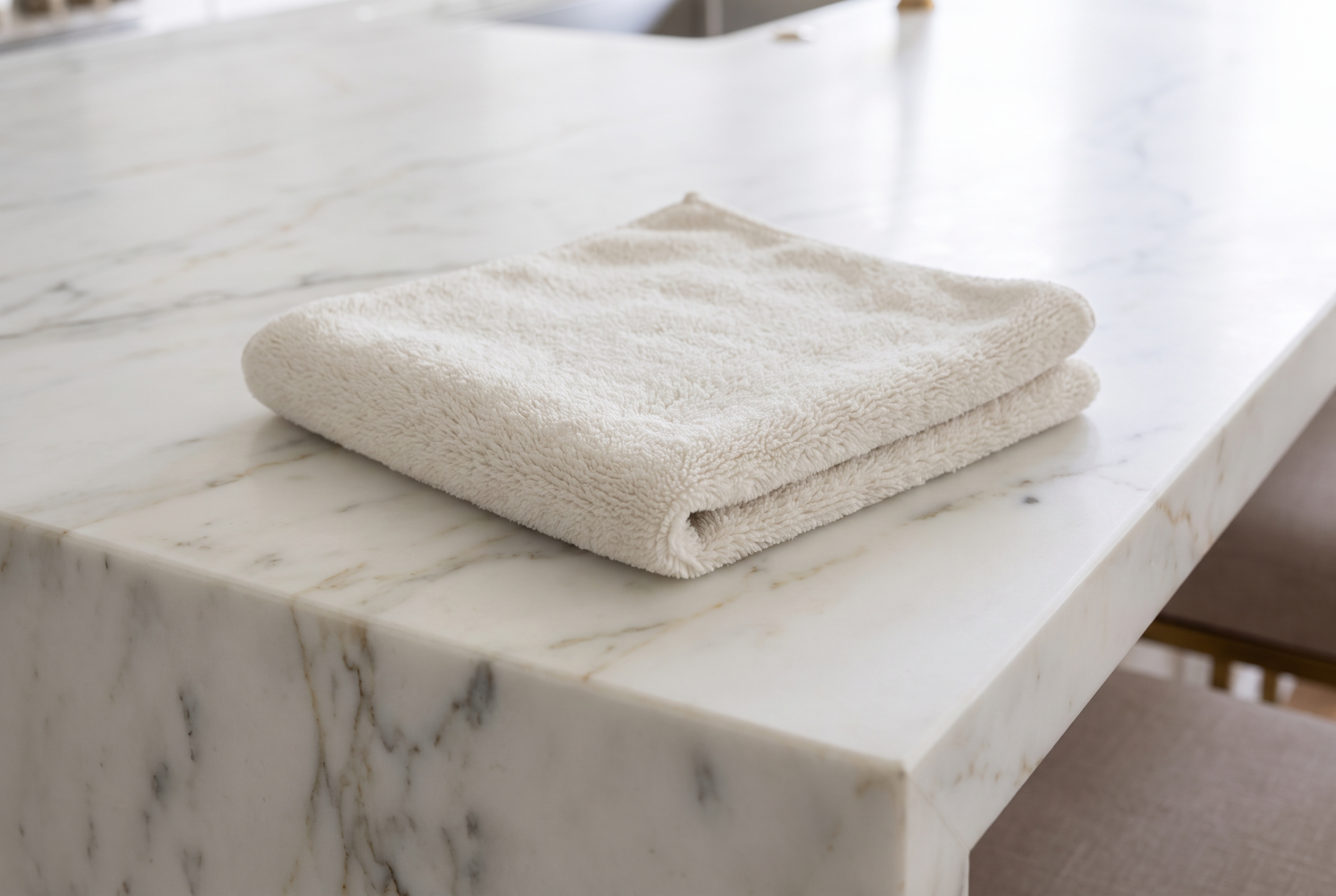
Think of these less as rules for a precious room and more as small choices that help preserve a material you care about.
A marble countertop can handle a family dinner. What it does not need is an acidic cleaner left on it while everyone clears the table.
What a sealer does, and what it does not do
A penetrating sealer works inside the stone. It helps slow the absorption of water and oil-based spills, giving you more time to clean them up.
That is useful.
It is not acid protection.
Marble is calcium-based stone. Acid can react at the surface before a sealer has anything meaningful to stop. If a product promises that a basic sealer will make marble etch-proof, it is worth asking a few more questions.
We recommend sealers where stain resistance is the real need. We do not describe them as a solution for etching, because they are not.
What about anti-etch coatings?
Anti-etch coatings are bonded surface systems. They are a different category from StoneGuard®, and M&T does not install them on countertops.
They can create a protective layer over the stone. They also change the surface system. When a coating is worn or damaged, renewing or removing it is restoration-level work: the coating has to be removed and the stone refinished. Coatings can show scratches. They are not scratch-proof.
That does not make them wrong. It means the choice should be made with open eyes.
Ask to see a sample on your actual stone. Look at it in your own light. Ask what maintenance and future renewal involve. A good decision should still feel right after you have seen it in your own kitchen, in your own light.
The removable option we install
StoneGuard® is a clear, removable film engineered for natural stone. It is not a sealer and it is not an anti-etch coating.
It creates a physical barrier above the marble. The stone stays beneath it. The film is scratch-resistant and designed to take everyday scuffs and wear, but it is not scratch-proof. Use cutting boards. Use trivets. Treat it as a layer of protection, not a license to be careless.
Its practical difference is simple: when the film eventually needs replacement, it can be replaced without refinishing the marble beneath.
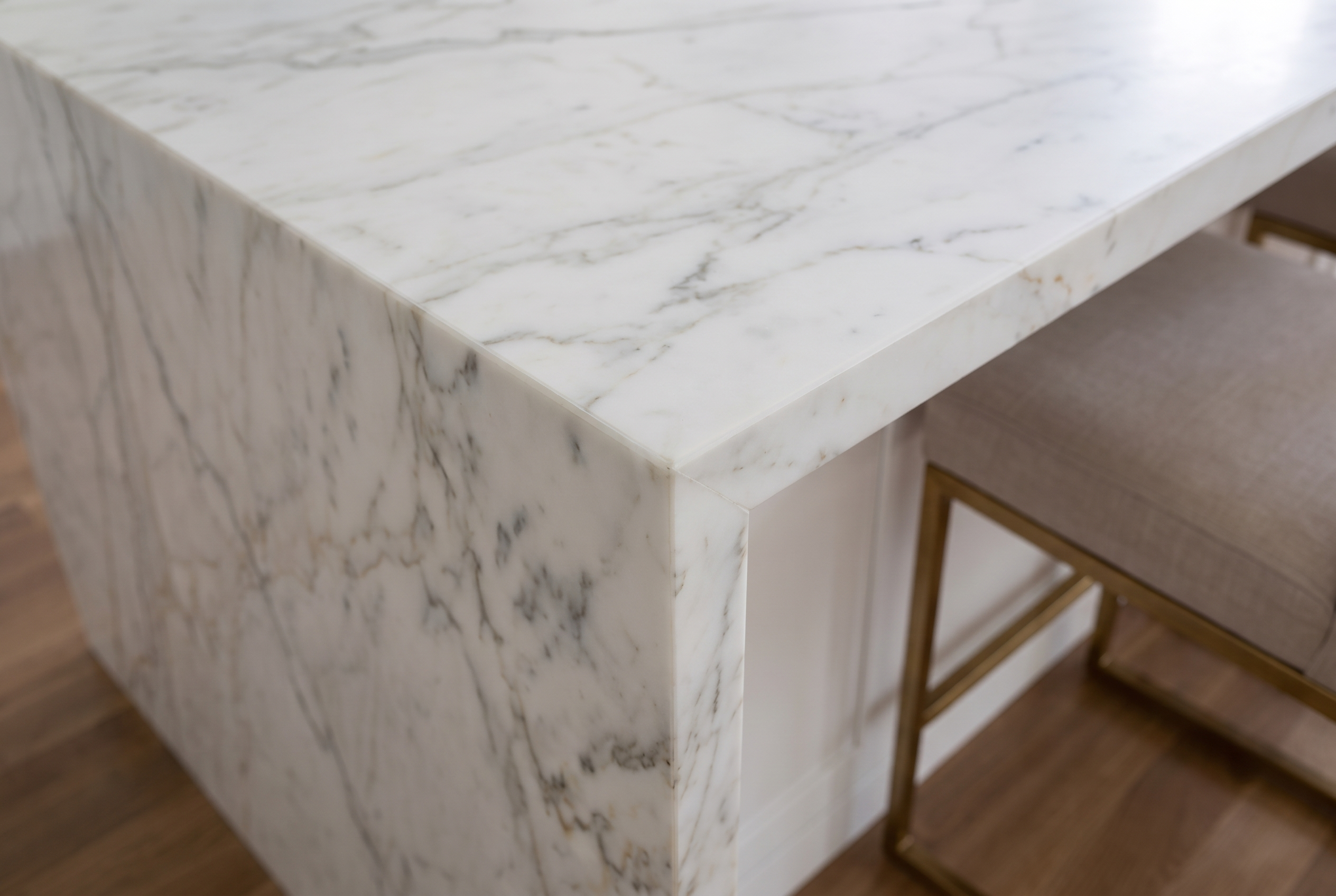
For many homeowners, that is really the point. You should not have to choose between a beautiful kitchen and one that feels lived in.
When repair comes before protection
If your marble already has dull rings, broad haze, or rough areas, it may make sense to restore the surface before thinking about protection. Film and sealers protect what is there. They do not reverse existing etching.
A professional can hone and polish the surface back to an even finish, then help you decide whether simple care, a sealer, or StoneGuard® fits how you use the room.
We would rather tell you that you only need a better cleaning routine than sell you a service you do not need.
A final thought
The right countertop protection is not the product with the loudest promise.
It is the choice that lets you enjoy the home you built without making you anxious every time someone pours wine.
If you are in NYC, Long Island, North Jersey, or eastern Pennsylvania, send us a photo of your marble. We will give you a clear opinion on what makes sense and what does not.