

Quick answer
You chose quartzite for its beauty and durability. Now you need to know which cleaner is safe for a sealed or film-protected counter.
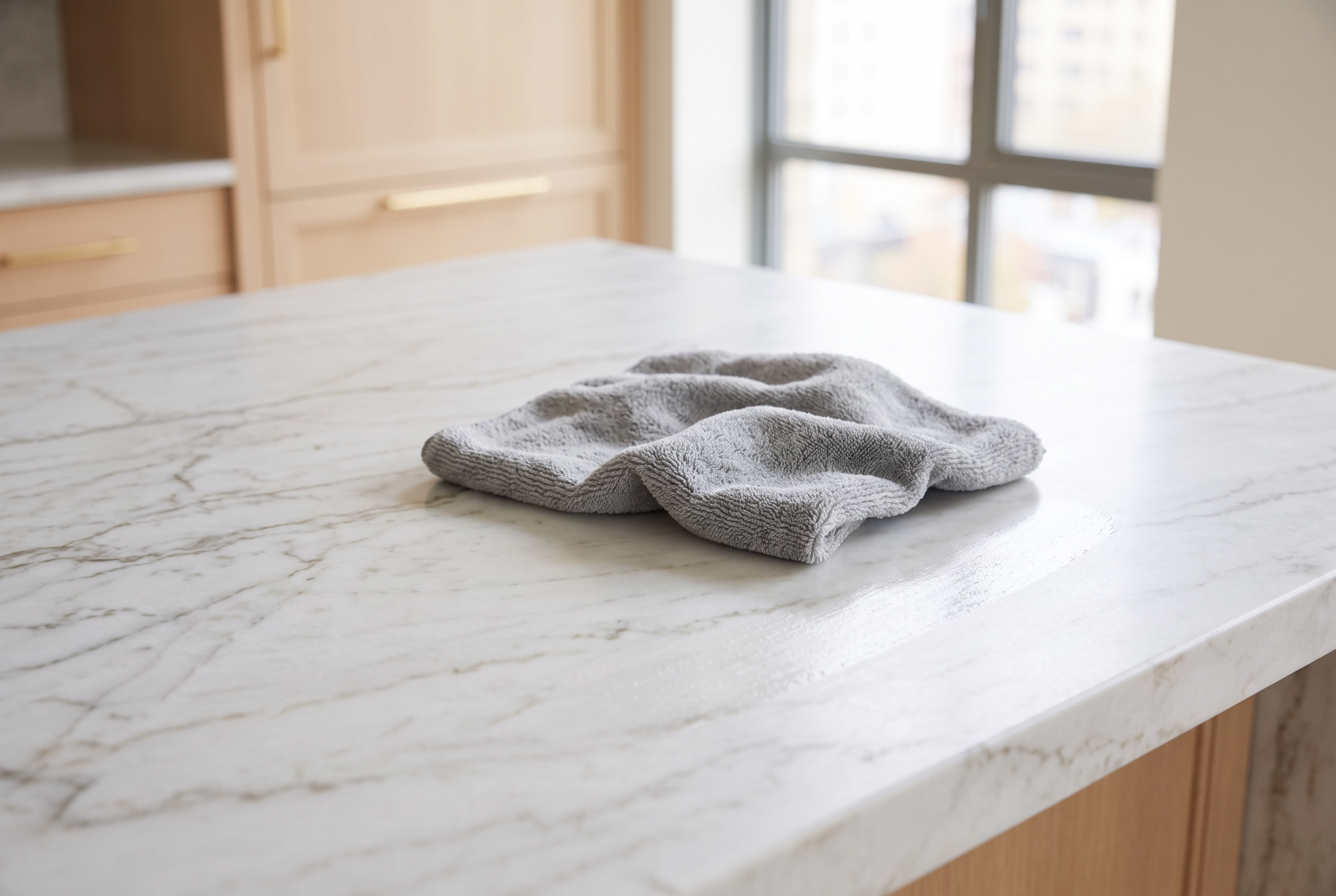
Use a soft microfiber cloth and a cleaner labeled safe for natural stone. Follow the product directions and dry the surface. If your counter has StoneGuard® removable film, follow the film care instructions.
- Do: Wipe crumbs and spills with a soft cloth.
- Do: Use a cleaner labeled safe for your stone or protection system.
- Avoid: Vinegar, lemon cleaners, abrasive powders, scouring pads, and magic erasers.
- Avoid: Guessing at a stain treatment before you know whether the mark is residue, a stain, or a change in the finish.
- Call a pro: When gentle cleaning does not change the mark, or the surface looks or feels different.
How should I clean a quartzite countertop day to day?
Quartzite is durable, but daily care should still be gentle.
- Remove loose debris.
Pick up crumbs and grit before wiping. Small hard particles can drag across the surface.
- Use the right cleaner.
Choose a pH-neutral cleaner labeled safe for natural stone, or use mild dish soap only if your stone or protection provider recommends it. Follow the label instead of improvising a stronger mix.
- Wipe with microfiber.
Use a clean, soft cloth. Give sticky spots time to soften rather than scrubbing them with an abrasive pad.
- Rinse if needed and dry.
Remove cleaner residue according to the product directions, then dry the counter with a fresh towel. This helps prevent streaks and mineral buildup.
- Handle spills when you see them.
Wine, coffee, tomato sauce, citrus, and cooking oil are easier to manage before they dry or absorb.
That routine is enough.
How do I disinfect quartzite without damaging it?
Bare stone, a penetrating sealer, and removable film can have different care requirements. Use a disinfectant only when its label confirms compatibility with your surface. Follow its contact-time and rinsing directions. Do not improvise an alcohol or bleach mixture.
What if my quartzite already has stains?
First, make sure it is a stain. A dark spot may be absorbed oil or moisture. A pale or rough mark may be a finish issue. Start with your normal stone-safe cleaner. If the mark remains, stop before trying solvents, powders, or strong chemicals. Poultice materials depend on both the stain and the stone, and rust-colored marks need particular care. A clear photo can help a stone professional identify the next step.
Does quartzite in NYC still need protection and sealing?
Quartzite absorption varies by slab. A penetrating sealer can slow absorption and help reduce staining, but it does not stop etching or scratching. Follow the manufacturer's testing and maintenance guidance, or ask a stone professional to assess the surface.
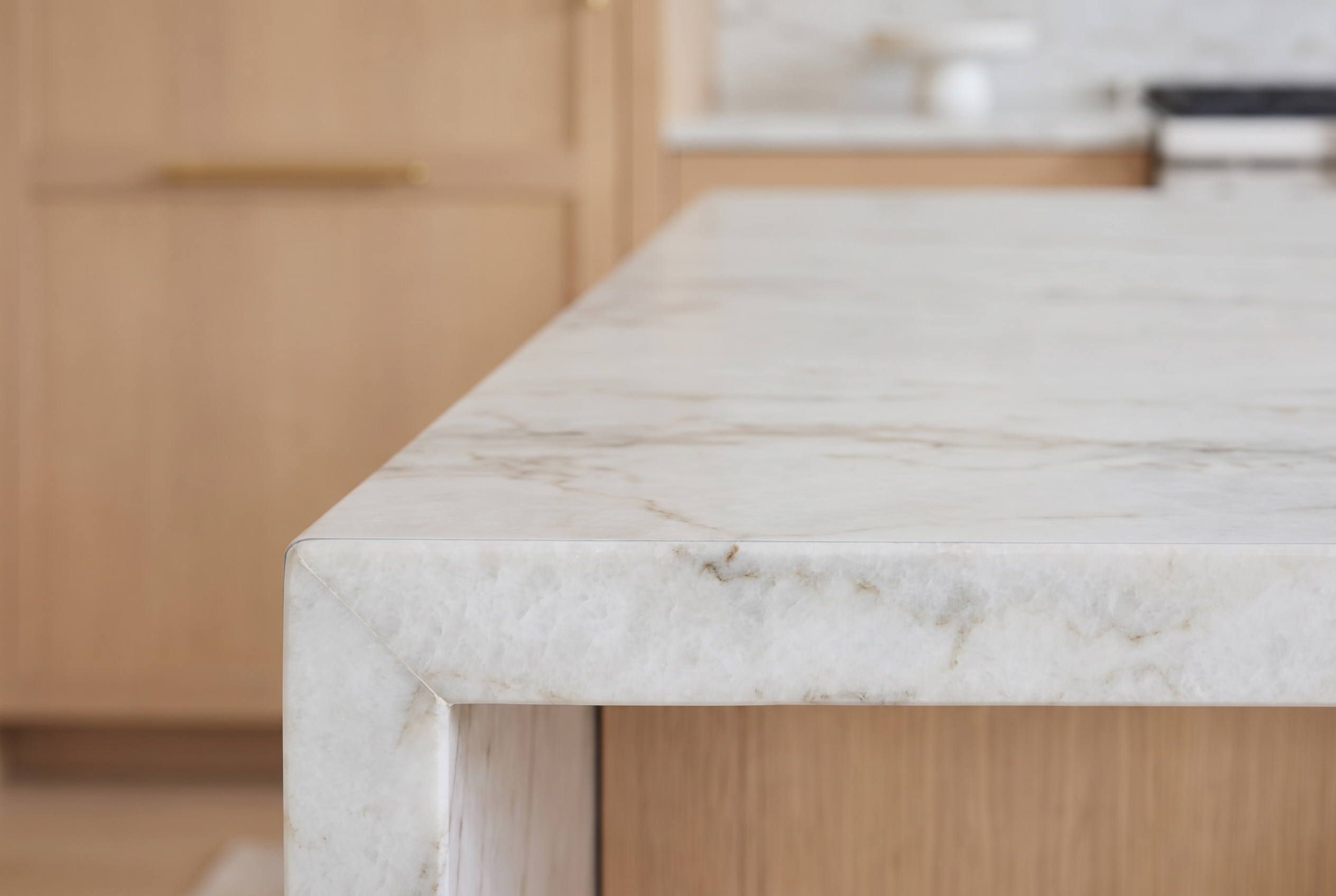
StoneGuard is different. It is a removable film engineered for stone, not a sealer or an anti-etch coating. It creates a physical barrier that prevents staining and etching from reaching the stone. It is scratch-resistant, never scratch-proof.
Here is how the main options differ:
| Protection option | What it does | What to know |
|---|---|---|
| Impregnating sealer | Slows liquid absorption and helps reduce staining | Does not stop etching or scratching |
| Bonded anti-etch coating | Creates a bonded surface layer | Can show scratches or wear; renewal or removal can require restoration-level refinishing |
| StoneGuard removable film | Creates a physical barrier that prevents staining and etching | Scratch-resistant, not scratch-proof; removable and replaceable |
M&T does not install bonded anti-etch coatings on countertops. For homeowners who want a removable protection layer, we recommend StoneGuard. If the film becomes worn or damaged, the film can be replaced while leaving the stone beneath untouched.
What to avoid
- Skip acidic or abrasive cleaners, rough pads, and magic erasers.
- Check compatibility before using a degreaser or bathroom cleaner.
- Use a trivet for hot cookware, and lift rough items instead of sliding them.
- Do not assume a film made for another surface is suitable for natural stone. An unsuitable film can create risks for the stone.
When to call a pro
If gentle cleaning does not change the mark, more scrubbing is not the answer. Get a professional assessment when a dry surface still has a dark spot, you see unusual color near a vein, the finish looks dull or rough, or you do not know which protection system is present.
You can see examples in our before and after gallery, learn about our stone services, and read our common questions.
Frequently asked questions
What is the best cleaner for quartzite countertops?
Use a pH-neutral cleaner labeled safe for natural stone. Apply it with a soft microfiber cloth and follow the product directions.
Can I use Dawn dish soap on quartzite?
Use mild dish soap only if it is compatible with your specific stone, sealer, or film. Keep the amount modest, remove residue, and dry the surface. When in doubt, use a product specifically labeled for natural stone.
How often should quartzite countertops be sealed?
There is no single schedule for every quartzite counter. Absorption, sealer choice, use, and care all matter. Test and maintain the surface according to the sealer manufacturer's guidance or ask a stone professional to assess it.
How do I clean quartzite that has StoneGuard protection?
You are cleaning the removable film, not the bare stone. Use a soft microfiber cloth and the cleaner recommended for the film. Avoid abrasives and unapproved chemicals.
Will StoneGuard film change the look of my quartzite?
StoneGuard does not change the look of the existing stone. StoneGuard is designed to match the current finish of your stone and to act as a protective layer for stone.
Get a local assessment
If you are in New York City or northern New Jersey and you are not sure what is on your quartzite, send us a clear photo or short video. We will help you figure out whether you are dealing with residue, a stain, finish damage, a sealer question, or a protection decision.
Visit mtsurfaceprotectors.com to reach out.